Launching New Land-based Planners’ Forum
Launching New Land-based Planners’ Forum to Strengthen Exchange and Cooperation Across the Baltic Sea Region.
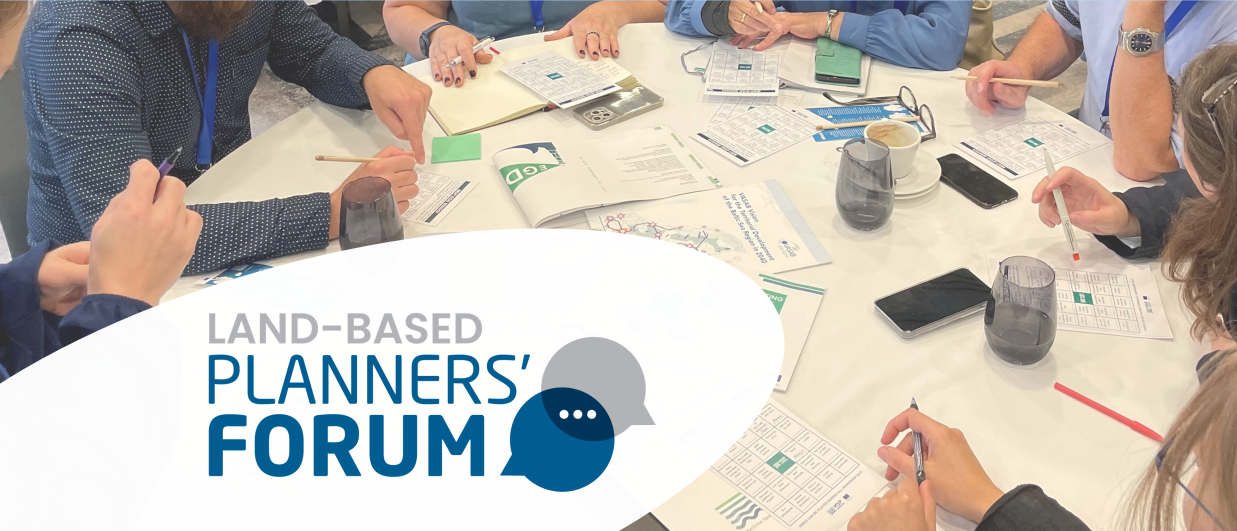
The Land-based Planners’ Forum will be launched as a new platform for cooperation among spatial planners across the Baltic Sea Region. The Forum is being created as an informal and inclusive network where planners from local, regional, and national levels can meet, exchange experiences, and learn from one another. Its main goal is to support better coordination, stronger professional skills, and more coherent and sustainable development across both urban and rural areas.
Through open dialogue and shared learning, the Forum aims to help planners respond more effectively to common challenges such as the effects of climate change, geopolitical changes, and questions of social and spatial resilience. By connecting professionals who shape territories for both everyday life and the long term, the Forum will strengthen understanding between countries, governance levels, and planning systems, and contribute to more consistent and future-oriented spatial planning across the region.
The launch of the Land-based Planners’ Forum takes place within the framework of an international cooperation project coordinated by the VASAB Secretariat together with its partners. As part of this work, an upcoming meeting of invited planners and experts, on 11 and 12 of February 2026 in Tallinn, will focus on shaping how the Forum should function in practice — from cooperation formats and thematic priorities to long-term organisation. This joint discussion will lay the foundation for the Forum’s future activities beyond the project itself. Read more about the event here. If you would like to contribute, please inform the VASAB Secretariat at: egija.stapkevica@vasab.org and margarita.volosina@vasab.org.
At the same time, two insightful reports have been prepared within the project to support the start of the Forum and future cooperation.
The first report, “A Brief Comparison of Seven Spatial Planning Systems in the Baltic Sea Region” provides a clear overview of how spatial planning is organised in Finland, Estonia, Latvia, Lithuania, Poland, Germany, and Sweden. It helps readers understand who is responsible for planning at different levels, how decisions are made, and what similarities and differences exist between national systems. This makes it easier for planners and partners to work together across borders.
The second publication, “Feasibility Study: Land-based Planners’ Forum in the Baltic Sea Region” explores the possible content of future Forums and how the Forum could operate in the long term. It looks at cooperation models, governance options, and the practical benefits of maintaining an active regional network of planners.
Together, these two reports provide a helpful knowledge base for launching the Land-based Planners’ Forum and supporting its development as a lasting cooperation platform in the Baltic Sea Region.
Read more about the project here.
Project is financed with the contribution of the Swedish Institute.